

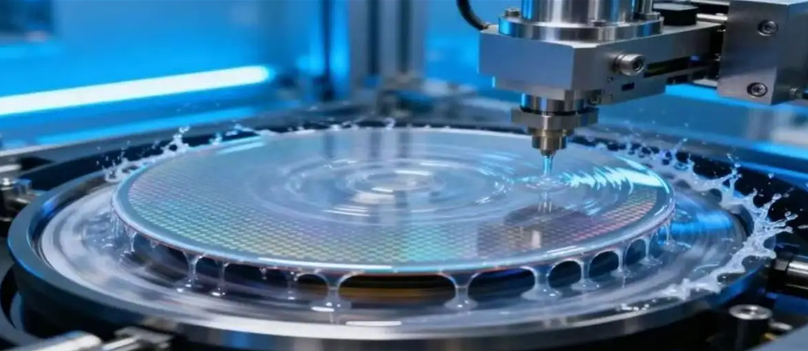
On the fab floor, you learn fast: a half-degree drift during the photoresist bake can shift critical dimensions by nanometers, and a single particle can kill a die. The heating element has to deliver repeatable, clean heat—every single cycle. What matters, technically We run tungsten filament quartz lamps built for semiconductor thermal budgets. The tungsten filament gives you stable radiant output, and the quartz envelope transmits clean infrared with minimal outgassing. Across the target plane, temperature uniformity holds at ±0.1°C, and the package is cleanroom-compatible for Class 1–100 environments. Zero particle generation is enforced through controlled materials and sealed terminations, keeping particle counts at process-acceptable levels. That output repeatability is what lets you hit tight soft bake and hard bake profiles without drama, protecting yield across lots. Why it works where you need it In lithography and resist processing, stable, uniform heat translates directly into consistent solvent removal and crosslinking. That keeps CD control and edge-bead behavior in spec. Cleanroom compatibility and low particle shedding mean fewer contamination events on wafers—and fewer unplanned recoveries. Efficiency comes from matching the lamp spectrum and power density to the thermal load. You cut waste heat while still getting fast thermal response. The payoff is predictable bake performance, stable process windows, and fewer scrapped wafers. Things to keep straight These lamps are engineered for specific thermal loads and need matched sockets and power supplies. Swap components outside the defined envelope, and you risk shifting uniformity and shortening life. Plan for thermal mass and mounting tolerances so the focal plane lands where your process window expects it. With proper alignment and controlled operating conditions, the lamp delivers stable output over 5,000+ hours, with less than 5% output drop. That’s what keeps the line running without thermal surprises.