
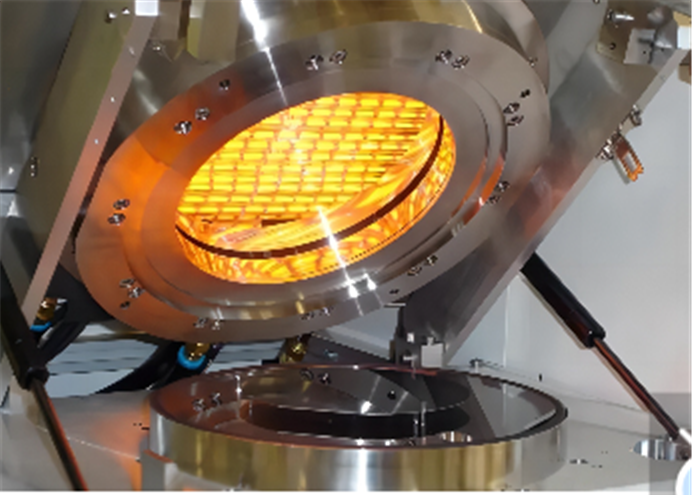
Why Vacuum IR Heating is the Smarter Way to Handle Lead-Free Chips
Let’s be honest: the “lead-free and eco-friendly” rules for semiconductor fab are a headache. But they’re here to stay. For a long time, we just threw everything into convection ovens. The problem? You’re basically paying to heat up a giant box of air, hoping the wafers get warm enough—all while praying no dust or contaminants drift onto your work. That’s where vacuum infrared (IR) heating comes in. Instead of messing around with hot air, IR just sends electromagnetic radiation straight into the substrate. It’s direct. It’s clean.
How it actually works
Think of it like stepping into the sun on a winter day. You don’t wait for the air around you to warm up; you feel the heat on your skin instantly. In a vacuum, we don’t have to worry about heat leaking away through the air. The IR lamps shoot out short-wave radiation that sinks right into the curing layers of the component. It’s incredibly fast. You can crank up the surface temperature without wasting energy heating every single cubic inch of the chamber. It’s a much leaner way to work. You aren’t powering massive fans or heating thousands of liters of gas just to fix a few wafers.
The tricky parts (The Engineering)
It’s not all plug-and-play, though. To hit the temperatures needed for lead-free solder or photoresist, you need some serious muscle—usually high-wattage quartz or halogen elements. The real challenge is the seal. These lamps have to sit in a vacuum without leaking. If you get “outgassing,” your vacuum is ruined, and so is your batch. We use specialized seals to keep everything tight. And a word of caution:watch your power density. If you just blast the wafers with high-intensity IR, you’ll get “hot spots.” It’s easy to accidentally fry one section of the wafer. To stop that, you either need to rotate the wafer or make sure your lamp array is perfectly balanced. Also, your PID controllers need to be snappy. IR hits the target temperature almost instantly, so your system has to be able to keep up.
The bottom line for your floor
Switching to vacuum IR lets you ditch those toxic solvents and shrinks the carbon footprint of your drying stage. If you’re still using those old-school thermal tunnels, this is a great way to reclaim some floor space and stop overpaying the electric company. Just one tip: check your cooling water loop. Those lamp housings get hot, and you’ll need a system that can handle the heat soak without breaking a sweat.