


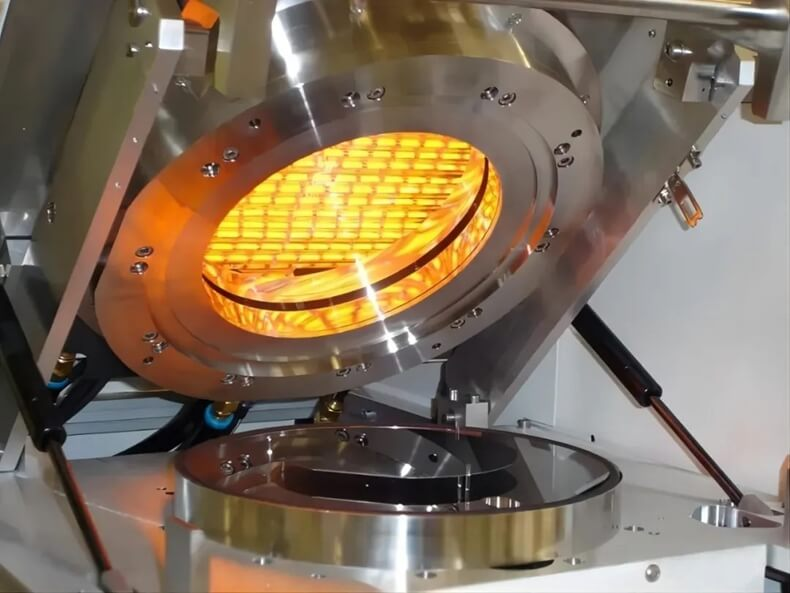
On the fab floor, a 0.5°C drift in the photoresist bake is enough to scrap an entire lot. We built our RTP lamp to take that uncertainty out of every thermal step—soft bake, hard bake, and rapid thermal processing—without adding particle risk. What matters under the hood The lamp uses short-wave halogen elements inside a quartz envelope, so energy transfer is fast and clean, with tight spectral control. Across the active zone, wafer-level temperature uniformity holds at ±0.1°C, and repeatability stays in a narrow band so lithography and thin-film profiles don’t wander lot to lot. It’s engineered for cleanroom Class 1–100, with hardware and sealing choices that keep particle generation at zero during steady operation. Power delivery is stable, and you can tune the thermal profile with enough resolution to match photoresist sensitivity without blowing the thermal budget. Why it holds up in production Yield and uptime are the scoreboard. Tight uniformity cuts CD and thickness dispersion, which means less rework and fewer re-qualifications. Fast ramp control shortens cycle time without stressing the wafer. Energy efficiency lowers operating cost per batch, and the long lamp life stretches replacement intervals—fewer maintenance windows, smaller spare inventory. The payoff is predictable performance: one recipe, one outcome, shift after shift. Here is the part you can’t set-and-forget Installation comes down to matching the chamber interface and nailing optical alignment. The lamp performs best when mounting surfaces are clean, cool, and properly shielded. Over thousands of hours, output can drift, so put calibration and lamp rotation on a fixed schedule to keep uniformity tight. When the fab runs 24/7, the lamp isn’t a “install and ignore” part—it’s a controlled process variable that needs the same discipline as any other unit process.