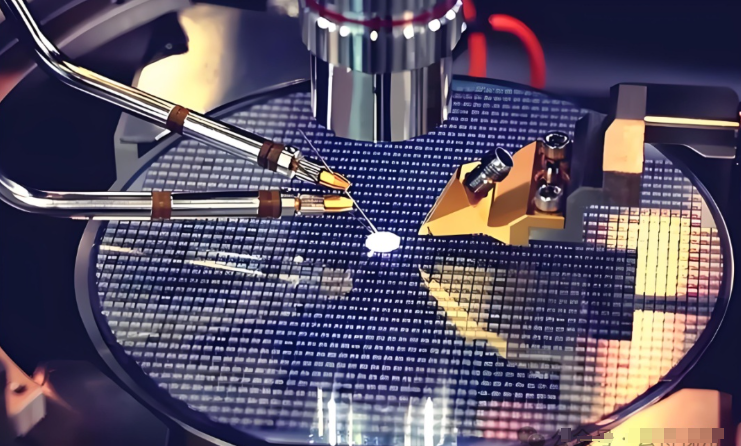
On the fab floor, a wafer dryer lamp dying at 3 a.m. isn’t “maintenance.” It’s a line stop. Soft bake and hard bake temperatures start to drift, photoresist profiles shift, and particle counts jump. Next thing you know, you’re staring at scrap, rework, and lost wafer starts. We built our replacement lamps to keep that moment from happening. What actually matters under the hood The lamp packs short-wave infrared (SWIR) emitters inside a quartz envelope, tuned to dump heat straight into the wafer stage—fast and direct. We hold output stability at ±0.1°C across the bake surface, so the photoresist temperature stays locked to the recipe, cycle after cycle. It’s built for 7×24 fab life: rated life over 5,000 hours, with output degradation under 5% over that run. Cleanroom-compatible materials and a particle-minimized assembly keep contamination risk down where it counts—Class 1–100 environments. Why this matters in lithography In lithography, bake uniformity is the thermal budget. This lamp steadies the bake curve, cutting down CD and thickness variation that show up when you have hot spots or cool edges. The payoff is fewer excursions, higher first-pass yield, and maintenance windows you can plan around. Energy draw is matched to the dryer’s thermal load, so you aren’t lighting up the stage more than needed. Longer service intervals mean your team spends less time swapping lamps and more time on process control. Here’s what you need to get right on install Match the base type, connector, and fixture tolerances. Then verify voltage and optic alignment against the dryer’s reflector geometry. The lamp runs hot, so keep the thermal management intact—don’t bypass shielding or airflow. Expect a short warm-up before you hit setpoint repeatability. For full compatibility, match the spectral profile to the original equipment spec.