
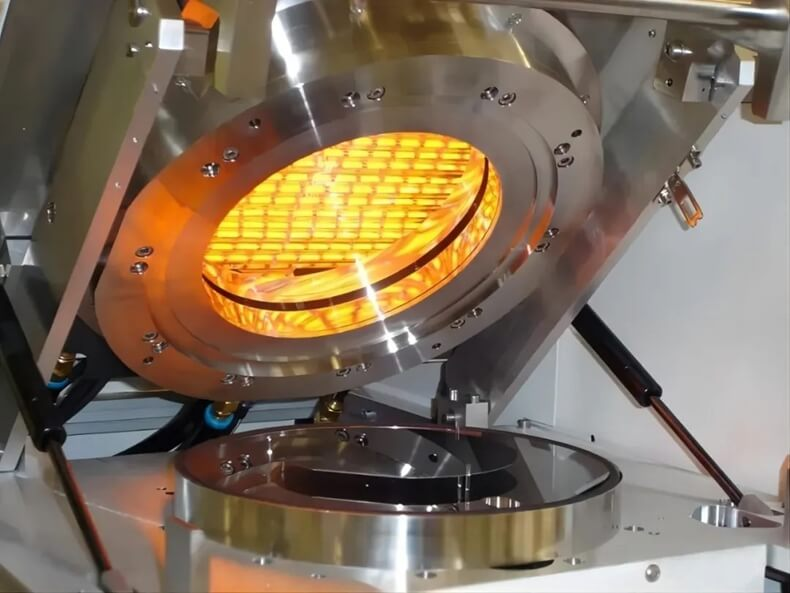
On the fab floor, ellipsometry data is only worth what the probe temperature is worth. A 1°C drift during soft bake or hard bake will move photoresist thickness and CD, and the line will kick the wafer out. We built the ellipsometry wafer probe heater to run with zero tolerance for that kind of wobble: wafer-level uniformity stays at ±0.1°C, so the reading tracks the process, not the temperature swings. What matters under the hood The heater uses a low-thermal-mass, NIR-optimized element and a quartz thermal path to keep gradients off the chuck and across the wafer. Setpoints from 25°C to 300°C repeat within ±0.1°C, and the ramp control keeps the photoresist thermal budget in spec. Cleanroom rules are baked in: materials and seals are chosen for Class 1–100 compatibility, and the design doesn’t shed particles during steady state or cycling. Output stays stable over 5,000+ hours, with under 5% intensity drift under continuous operation. Why it holds up in lithography In lithography cells, the probe heater locks down the thermal boundary condition at the measurement point, so you stop chasing temperature-induced offsets that show up after hard bake and force rework. Process windows open because soft bake repeatability improves, and ellipsometry sees the film as it actually behaves. The payoff is fewer excursions, tighter CD control, and cycle time you can plan around. You also save energy with fast settling and low standby losses, without giving up precision. What you need to get right The unit needs a clean, filtered supply and precise mechanical alignment to the probe interface—misalignment can create micron-scale thermal nonuniformity. It will integrate with standard tool interfaces, but you have to specify the connector and mounting for your ellipsometry stage. Plan a short commissioning run to tune the PID constants for your wafer stack.