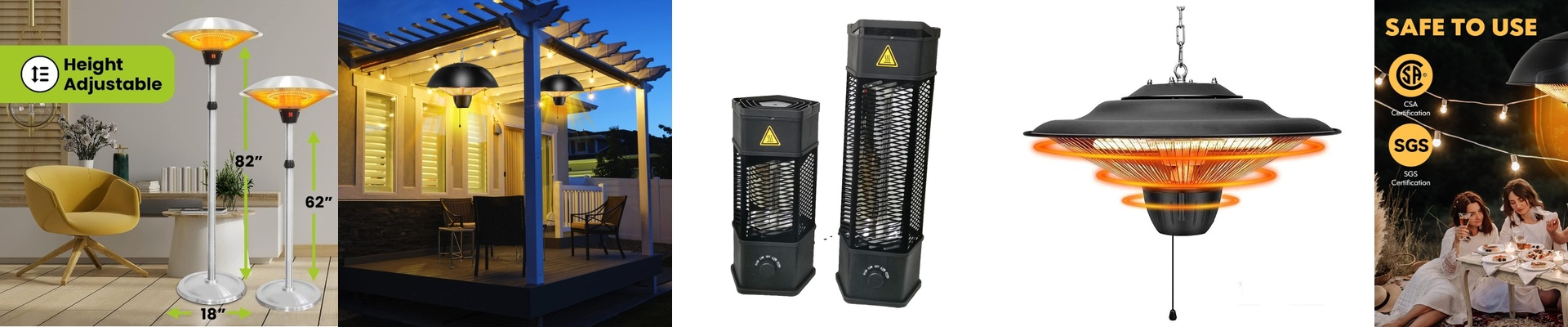

Making Your Outdoor Heaters Actually Smart
Ever waited twenty minutes for a room to warm up, only to realize you’re still shivering? That’s the problem with traditional heating. But when you hook up IP65 infrared heaters to a smart home hub, that lag just disappears. The second that relay clicks, you feel the heat. Why it feels different Most heaters try to warm up all the air in the room. Infrared is different. It sends energy straight to you and the things around you. It’s like stepping into a patch of sunlight on a cold March morning. If you wire these into a Zigbee or Matter gateway, you can kick them on from your phone or a sensor. There’s no waiting for a furnace to kick in or air to circulate. It’s just… instant. The “IP65” part (and why it matters) If you’re putting these outside or in a damp garage, you can’t cut corners on the rating. IP65 is the gold standard here. The “6” means dust can’t get inside. The “5” means it can handle a decent spray of water without frying the guts of the machine. Basically, it can take a beating from the weather and keep humming along. But here is a pro tip:don’t just plug these into a cheap smart switch. These heaters pull a lot of power. If you use an undersized relay, the contacts will literally weld themselves shut or burn out in a few days. You need a heavy-duty contactor that can handle that initial surge of power when the lamps hit full blast. A few things to watch out for Smart tech is great, but it’s not perfect. Wi-Fi drops. Hubs crash. If that happens, you don’t want to be stuck in the freezing cold because your router decided to reboot. Always, always install a physical override switch. And one last thing—check your breaker. High-wattage infrared arrays are power-hungry. If you put too many units on one smart zone, you’ll be spending your winter walking to the electrical panel to flip the mains back on.